Tuesday, June 26, 2007

Eat Healthy Without Meat

by Alex Fir

As concerns about healthy eating have grown, so has the interest in vegetarianism. Numerous nutrition experts recommend eating low on the food chain. In plain language this means eating more grains, vegetables and fruits, and fewer meats, cheeses and other animal based products.

There are various levels of vegetarianism, and each type has its own unique health benefits and some health challenges as well. Of course vegetarians, like meat eaters, must still make healthy food choices. Simply pigging out on French fries while avoiding the burger will not make you a healthy vegetarian.

Some people who consider themselves vegetarians still eat poultry and seafood, while others avoid all animal flesh, even fish and chicken. Most vegetarians still eat milk, dairy products and eggs. In nutritional circles these people are referred to as lacto-ovo vegetarians.

Vegans, on the other hand, avoid all animal products, including eggs, milk and dairy products, and even fabrics like silk, leather and wool. It is vegans who face the largest challenges and risks when trying to follow a healthy diet. Most vegetarian diets provide more than enough nutrition, as long as smart dietary choices are made.

The key to eating a healthy vegetarian diet is much the same as eating a healthy diet that includes meat. It all boils down to making smart food choices, understanding nutritional labels, and cooking your vegetables to maximize their nutritional value.

Choosing the foods that make up the bulk of a vegetarian diet is very important. For most vegetarians, vegetables, grains, lentils and soy products will make up the bulk of their diet, and these staples are included in many vegetarian recipes.

Many newly minted vegetarians worry that they will not be able to get enough protein and iron without eating meat, but for most vegetarians this is not a problem. Most diets today actually contain too much protein, and there are many non animal derived sources of protein for vegetarians to enjoy.

Proper cooking techniques are of course very important to any healthy diet. Avoiding high fat cooking methods is important, as is avoiding the use of high fat creams, butters and sauces. A vegetable stir fry cooked in healthy olive oil can be a great addition to any vegetarian menu. And a great fruit salad is both easy to make and delicious as a snack or a meal.

The only real area of concern when it comes to vegetarianism and health is the B-complex vitamins, particularly vitamin B12. Vitamin B12 is almost exclusively derived from animal based sources, so vegans, who avoid all animal products, should take a high quality vitamin B12 or B-complex vitamin supplement. It is also important for vegans to discuss their diet and lifestyle with their family physicians. As vegetarianism becomes more widespread, the amount of information on the nutritional needs of these two groups continues to grow.

The bottom line is that vegetarians can enjoy a very healthy lifestyle. Making vegetables, fruits, whole grains and beans the centerpiece of the diet is a smart move for many people, and a good low fat vegetarian diet can be a great way to enjoy a healthy lifestyle. As with a meat based diet, however, it is important for vegetarians to follow common sense eating guidelines and make smart choices when creating meat free meals.

EzineArticles Expert Author Alex Fir

A lot of people eat foods that are generally deficient in the vitamins and minerals. Visit Nutritional Supplements Center to learn why it is vital that you take nutritional health supplements. You will also discover best nutritional supplements.

Related Quotes

"Nothing will benefit human health and increase chances for survival of life on Earth as much as the evolution to a vegetarian diet." ~Albert Einstein

"If you step back and look at the data, the optimum amount of red meat you eat should be zero." ~Dr. Walter Willet

"The beef industry has contributed to more American deaths than all the wars of this century, all natural disasters, and all automobile accidents combined. If beef is your idea of "real food for real people" you'd better live real close to a real good hospital." ~Neal Barnard, M.D.

"I find that low protein diets often contribute to improvement in patients with immune system problems ... In fact, it would be hard to become deficient in protein in our country even if you tried." ~Andrew Weil, M.D.

"It is absolutely healthier to replace red meat in the diet with fruits and vegetables."~Steven Ferrel C.N.

Life Dynamix Comment

Americans have been mislead by the beef and dairy industries for long enough. The dairy industry designed the original food pyramid, not health minded nutritionists or doctors. Red meat should contain the following warning on the label: "Red meat contributes to heart disease and some forms of cancer." It is absolutely healthier to replace red meat in the diet with organic fruits and vegetables - Period!

Water For Health & Longevity

by Dr_Wilson


By Dr. Lawrence Wilson

Water is not only the most essential substance next to oxygen for human life. It is fantastically complex, often containing hundreds of dissolved minerals and chemicals. It is a marvelous substance whose value is often unrecognized, even by scientists who specialize in the field.


QUALITIES OF WATER


Large textbooks are written about water. Water has a spin, moment, weight, particle size, specific gravity, acidity, hardness, total dissolved solids, boiling point, overall quality and microorganisms. Let us discuss each of these in more detail.


1) Spin. Water molecules spin in either a clockwise or counterclockwise direction. This influences the waterπs effect on the human body. The spin should be clockwise. When it is reversed, the water pulls minerals from the body and disrupts normal mineral metabolism.


2) Moment. Water has a weight or molecular structure that depends on its moment. Moment is the manner in which a substance behaves in the presence of other substances. Water is, of course, in contact with many substances which influence it and which it in turn influences. Moment has to do with the way water interacts with these substances.


3) Weight. Everyone has heard of heavy water. This is radioactive water that contains deuterium instead of hydrogen. All water contains some deuterium as it is commonly present in the earth. The proportion of deuterium gives water its weight. Heavy water is not beneficial as it is radioactive and damages the body.


4) Particle Size. Water contains dissolved particles. These are ions, electrical and protonic particles. The size of these particles also imparts qualities to water that are easily measured with electrical conductivity testers.


5) Specific Gravity. Water has a specific gravity index that also influences its effect on the body. The higher the specific gravity, the more it adheres to cell walls and other structures. This is the viscosity of the water. Ideally, water should have a very low specific gravity. This means the water is ?wetterπ and will penetrate the cells better, bringing more nutrients to the cells and carrying away more toxins.


6) Acidity. Water, like all substances, has a degree of acidity or alkalinity that also influences its effects on the body. The higher the pH, the more alkaline the water. Water that is too alkaline or too acid is not healthful. Many people are using machines that alkalinize the water by adding or removing minerals from it. This is often risky as it changes the properties of the water. I do not recommend these machines.


7) Hardness. All naturally-occurring water contains minerals to some degree. Hardness refers to the amount of calcium in the water. I recommend a water that is hard, but not too hard.


8) Total Dissolved Solids. This refers to the total of the minerals contained in the water. This can vary tremendously from various water sources. A good total dissolved solid level (tds) is about 300-400.


9) Boiling Point. Water is said to boil at 212∫ F. However, the boiling point varies with the altitude. It also varies with the nature of the water. Salt water, for example, boils at a higher temperature. It also freezes at a lower temperature. This is why salt is applied to sidewalks and roads. It causes ice to melt. The boiling point of water is more important than one might imagine. This has to do with vaporization of the water in the body and its excretion through the lungs and skin. Water that boils at a lower temperature will volatilize or vaporize faster. This is beneficial for removing toxic substances from the body. I recommend a water with a low boiling point.

The boiling point depends of course on the minerals in the water. It also depends on the structure of the water and on subtle factors related to the spin, moment, weight and other factors.


10) Overall Quality. This refers to the amounts and ratios of the various minerals and other substances in the water. This is a complex area as there can be over 100 minerals in a particular water plus thousands of toxic chemicals, pesticide residues, pharmaceuticals, solvents and added chemicals in any particular water. Unfortunately, today most water is very contaminated with heavy metals and toxic chemicals.


11) Micro-organisms. All water except perhaps triple distilled laboratory water contains microorganisms. These include bacteria, fungi, parasitic organisms, viri and mycoplasma. Water may also contain insects, larvae, ova, plant matter, animal feces and many other biological compounds. I recommend water than has been filtered by passing through the earth to produce well and spring water.

Artesian well and spring water is generally better, as it comes from deeper within the earth. I do not, as a general rule, recommend surface water due to animal, plant and human contamination.

I also do not recommend drinking rain water. It is distilled, low in minerals and therefore "hungry" water. It has fallen through the atmosphere and picks up many contaminants that are in the air. Also, once it reaches the ground, it attracts whatever minerals happen to be in the gutters, cisterns and other collection devices. These are often toxic metals such as cadmium, lead and others.

Healthy Diet Tips


by AlanL

These healthy diet tips will keep you on the right path. Although healthy people are generally at a natural weight, this is not about dieting and losing weight, its about lifestyle. The mainstream seesaw of dieting is a moneymaker that doesn't address real health issues and concerns...
Healthy Diet Tips

By Alan LeStourgeon

These healthy diet tips will keep you on the right path. Although healthy people are generally at a natural weight, this is not about dieting and losing weight, its about lifestyle. The mainstream seesaw of dieting is a moneymaker that doesn't address real health issues and concerns.

One of the best things you can do for your body is eat at least twelve servings of fresh, organic fruits and vegetables every single day. These foods are packed with the things that our bodies need; natural, non-synthetic source of Vitamins A,B, C, and E, disease fighting antioxidants, minerals like potassium, calcium, phosphorous, and copper.

These days too many Americans get their vitamins from synthetic sources that are isolated and chemically induced. The best way to get this nutrition is from the good earth, directly from the source, from fruits and vegetables.

If eating that many vegetables seems overwhelming, just think about the colors. Get your blue and purples like blueberries and plums to reduce the risk of cancer and protect your urinary tract. Eat green vegetables like broccoli and celery to protect your bones, teeth and eyes. Consume your whites like mushrooms and onions for healthy heart function. Eat foods like oranges and carrots to boost your immune system from the yellow and orange fruits and vegetables. Finally, get your reds from foods like apples and beets for memory function and heart health.

All of these fruits and vegetables have healing qualities and you'll feel the difference. If you can't eat this much or don't have the time, drink juices made from a vegetable juicer, a great way to get the nutrients you need.

In addition to eating fruits and vegetables, cut down on saturated fats from processed foods and switch to unsaturated fats from nuts like almonds and vegetables including avocado. In general however, cut down on fat in your life and your heart and body will thank you for it. Speaking of processed food, begin to rid yourself of any processed foods. And of course, drink water so that you are flushing the toxins out your system and staying hydrated.

Use these healthy diet tips as a general guide to healthy eating, not fad dieting.

Alan LeStourgeon along with his wife Jean run the web site
www.ezHealthyDiet.com where they explore what it means to eat a healthy diet, have a healthy home and live a healthier life.

Sunday, June 24, 2007

What's your mood colour today?


by: Preeti Vasaikar

D yriad colours have myriad effects on our lives.
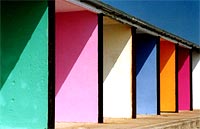
Colours are associated with every aspect of life and they influence both our mental and physical being.

Ever wondered what is your power colour?

image "The best yardstick to determine your power colour is to observe patterns in daily life," suggests colour therapist Shweta Dubal.

We are all aware that we have an inner mind, which is called the subconscious mind. Research has proved that the subconscious mind traps all our activities and is a permanent storehouse of memory.

For instance, the subconscious mind registers all the good and the bad times, along with their associated parameters like colour (which is of paramount importance), places, people etc.

What is a power colour?

When you prefer one colour over another, your subconscious mind is conveying a message about your personality and behaviour.

For some people some colours boost confidence, some others stick to a particular colour during important events such as job interviews and exams.

This is what we mean by the power colour.

Every person is attracted to a particular colour and this attraction may be a consequence of genes (may be your mama saw a lot of trees when she was expecting you and you are naturally inclined towards the colour green), early childhood memories, education, parent's and cultural beliefs (that black must not be worn), or if you follow fashion trends religiously, then you would wear pink because it is the colour of the season.

A person may not necessarily have a unique power colour, says Shweta Dubal.

Here is a chart that gives you an idea about the four basic power colours associated with your personality.

Red

Red symbolises energy flow, dynamism and vigour. The colour red is used to energise and stimulate appetite.

People preferring the colour red are vibrant, and have a daring attitude.

They are sensual and very passionate about what they like.

They have the capacity to take unimaginable risks and are prone to impulsive actions and variable moods.

Normally the genres of people who prefer this colour are sportsmen, music artists, and danseuse and art lovers.

When to use red:

  • If you are perennially dull and experience energy drain all the time.
  • If you are pregnant.
  • If you have low blood pressure problems.

Blue

Blue represents truth, tranquility, creativity and integrity.

People with affinity for blue are deliberate and confident.

Blue provides a calming, soothing effect and is therefore rightfully branded as the cool colour.

Blue also exhibits male energy and is gradually being used by women to exude an air of superiority.

However, too much blue could leave you feeling cold, depressed and sorrowful

When to use blue:

  • If you suffer from diseases of the ears nose and eyes.
  • If you have fever.
  • If you have thyroid problems.

Green

Green typifies harmony, growth and balance.

People who fancy green are level-headed and mature.

They are calm and sensitive to the needs of others.

They generally don't go to extremes and are eternally optimistic about life.

Green lovers will be loyal friends and prefer a sober lifestyle.

When to use green:

  • If you are pessimistic.

Yellow

Yellow signifies power, maturity, and intellect.

People who like yellow are generally judgmental and stubborn.

They also try to be perfectionists and are short-tempered.

Surprisingly all the rich and famous people use various shades of this colour abundantly in places of work, and offices.

When to use yellow:

  • If you have skin related problems.
  • If you lack focus and you are always in a state of dilemma.

If we integrate the various colours that relate to each chakra (energy centre in the body), either through healing, visualisation, clothes we wear, crystals, daily wear accessories etc we can go a long way in bringing about a balance within these areas, suggests Dubal.

Tomorrow: How colour therapy affects your life!

Source: http://in.rediff.com/getahead/2005/jun/09colour.htm


Graduation and still no job

"If opportunity doesn’t knock, build a door."
—Milton Berle

I do not envy those who don the cap and gown without a job offer in hand. But do not give up and certainly do not let down in your efforts. This is not the time to take a vacation or “take some time off.” It’s time to redouble your efforts and make a strong push forward. You are now truly full-time in your job search, and the quicker you make your mark the better, because the market is about to be flooded with about 400,000 other lost souls just like yourself. But with one very major difference—you have armed yourself for battle and are ready to push at the lines. Use the Napoleon Strategy—keep pushing at the lines until you see a point that is vulnerable, then put all your forces and energy into penetrating that area of possible access.

If you have not already done so, go back and read this book in its entirety. In it you will find several keys that can still unlock doors that might otherwise block your progress.

And never ever give up. This is your moment of truth and you need to push forward with every ounce of courage and tenacity.

Dressing for an Interview

While the college campus may be the perfect forum in which to exhibit your flair for the latest in fashion style, the interview is not the place to do so. With very few unusual exceptions (my apologies to Apple Computer and several creative agencies in NYC), sandals and sweatshirts are out. Oxfords and business suits are still in. I don’t like a necktie (noose?) any better than the next person, but it is still a fact of life in interviewing. Even though many companies have relaxed the internal company dress code, interviews still follow the conservative standard. Don’t buck the trend.

Campus fashions and work fashions are two different worlds.

Unfortunately, most college grads are woefully underprepared with proper interview dress. They feel they can “get by” with what is already in their wardrobe. Usually not. Dress for the world outside college is quite different from the campus scene. Remember that stylish is typically not conservative. Conservative is “in” for interviewing. Why? Because you should be doing the talking, not your clothes.

This is not to say that you need to go out and buy a whole new wardrobe. Go for quality over quantity. One or two well-chosen business suits will serve you all the way to the first day on the job and beyond. Then, when you are making some money (and have a chance to see what the standard “uniform” is for the company), you can begin to round out your wardrobe. For now, no one will fault you for wearing the same sharp outfit each time you interview. If you desire some variety within a limited budget, you might consider varying your shirt/blouse/tie/accessories as a simple way to change your look without breaking your wallet.

For those of you who need a quick review of the basics, follow these guidelines for successful interview dress:

Men and Women

  • Conservative two-piece business suit (solid dark blue or grey is best)
  • Conservative long-sleeved shirt/blouse (white is best, pastel is next best)
  • Clean, polished conservative shoes
  • Well-groomed hairstyle
  • Clean, trimmed fingernails
  • Minimal cologne or perfume
  • Empty pockets—no bulges or tinkling coins
  • No gum, candy, or cigarettes
  • Light briefcase or portfolio case
  • No visible body piercing (nose rings, eyebrow rings, etc.) or tatoos

Men

  • Necktie should be silk with a conservative pattern
  • Dark shoes (black lace-ups are best)
  • Dark socks (black is best)
  • Get a haircut; short hair always fares best in interviews
  • Fresh shave; mustaches are a possible negative, but if you must, make sure it is neat and trimmed
  • No beards (unless you are interviewing for a job as a lumberjack!)
  • No rings other than wedding ring or college ring
  • No earrings (if you normally wear one, take it out)

Women

  • Wear a suit with a jacket and skirt or slacks; no dresses
  • Shoes with conservative heels
  • Conservative hosiery at or near skin color (and no runs!)
  • No purses, small or large; carry a briefcase instead
  • If you wear nail polish, use clear or a conservative color
  • Keep your makeup simple and natural (it should not be too noticeable)
  • No more than one ring on each hand
  • One set of earrings only

If you are still unsure about the specifics after reading the above guidelines, check out a copy of John Molloy’s New Dress for Success or New Women’s Dress for Success. While these books may seem to have a rather conservative slant, it is still the norm for interviewing. It is almost always better to be higher than the standard than lower.

If you are still not sure how to dress for the interview, call and ask! That’s right—call the employer. But this is one time when you do not want to call the Hiring Manager—instead, ask to be put through to Human Resources and say:

“I have an interview with _____ in the _____ department for a position as an _____. Could you please tell me what would be appropriate dress for this interview?”

Sure, you run the risk of someone in HR thinking you are a social imbecile, but that’s a lot better than having the Hiring Manager distracted by inappropriate interview dress. While many work environments have shifted to business casual as the workday standard, business suits are still the interview standard. When in doubt, it is almost always better to err on the side of conservatism.

One final note on interview dress: while it goes without saying that your interview clothes should be neat and clean, very few interviewees give the same time and attention to their shoes. Shoes? Yes, shoes. I am aware of at least one Corporate Recruiter who forms first impressions based solely (pardon the pun) on shoes. This person does not have a shoe fetish—he subjectively judges that those who pay attention to details like shoes are also likely to be diligent in their work life. And it is not just that person’s opinion. Many have said that you can judge a person by their shoes. You will find that many ex–military officers (many of whom have found their way into management positions in corporate America) are especially aware of a person’s shoes. It is not enough to be clean and pressed. Make sure your shoes are conservative, clean, and polished.

Losing Weight Without Losing Money!

rticle by Emily, 17, Canada

Whenever January 1st rolls around, everyone starts talking about their New Year's resolutions. Ninety-nine percent of the time, it seems, these resolutions have to do with losing weight. (Mine did in 2001; as I wrote in a previous article, that year I resolved "successfully" to make two of my cats slim down.)

As a result of such resolutions, not only on January 1st but throughout the year, the weight loss industry has become a multimillion-dollar business. People - mostly women and girls - spend enormous amounts of money on weight loss clinics, diet pills, low-fat and/or calorie food, gyms, and exercise equipment. Yet despite all this, we're still getting heavier. Statistics suggest at least a third of North Americans are overweight. And this has led to an increase in health problems like high blood pressure, diabetes and heart disease.

Let me be clear: I don't endorse the Kate Moss look. Medical experts say it's best to stay within a Body Mass Index of between 20 and 25. To calculate your Body Mass Index, take your weight in kilograms and divide it by your height in meters multiplied by itself. For instance, if I'm 1.65 meters (165 centimeters) tall and weigh 58 kilograms, I divide 58 by 1.65 squared (1.65 x 1.65, which equals 2.7225). My Body Mass Index turns out to be 21.3. If youre like me and still think according to the old system, convert units of measurement to metric ones by multiplying your weight in pounds by 0.45 (example: 114 pounds equals 51.3 kilograms) and your height in inches by 0.0254 (example: 65 inches (5 feet 5 inches) ends up as 1.65 meters).

There are ways to slim down without spending oodles of money on various programs and gadgets. Based on my own and on friends' experience of shedding the pounds, I've come up with ten tips on what to do and not to do to lose weight.

1. Don't go on crash diets. Besides being potentially dangerous to your health, crash diets rarely lead to long-term weight loss. A common pattern is to lose a large amount of weight in a short period of time, only to gain it back again once the diet ends. It's better to learn healthy and long-lasting eating and exercise habits.

2. Don't skip meals. You get fixated on food and tend to gorge on it when your next meal rolls around. One Garfield cartoon, for instance, shows Garfield the fat cat on a diet imagining the dog Odie with an apple in his mouth like a Thanksgiving turkey. That's how obsessed he is with food. So make sure you eat three meals a day.

3. Make breakfast the biggest meal of the day. Because you'll be moving around throughout the day and will need energy, don't scrimp on this meal. Also, if you eat a good-sized breakfast and lunch you won't be tempted to pig out at dinner, after which time you don' t have as much chance to burn off the calories you've just consumed.

4. Avoid alcohol. The term "beer belly" didn't come about for nothing. Not only do alcoholic drinks contain calories, but alcohol itself can prevent the body from burning fat.

5. Cut down on sugary foods. Replace them with healthier and less fattening stuff. Here fruit comes in handy. Have delicious fruits like oranges, grapefruits, mangoes and peaches for dessert rather than cake or pie. Substitute unsweetened fruit juices for soft drinks. And if you really love sweets, save them for a special occasion when you'll value them more (remember, a long absence makes one fonder of heart). For example, every Saturday morning my best friend and I go out to a little cafe where I order a piece of strawberry-rhubarb pie. So I enjoy the pie as well as the time with my friend.

6. When it comes to foods from animal products, go lean. Take the skin off chicken. Buy lean meat, and if you can't find any, cut the fat off any meat you do eat. Also, make sure to drink skim or low-fat (1% or 2%) as opposed to whole milk.

7. Eat lots of fiber. As well as preventing constipation (a literal pain in the butt, especially, in my case, just before menstruation), fiber can help you lose weight by making your stomach feel full and thus reducing the urge to eat more. Good sources of fiber include fruits, vegetables, legumes (beans, lentils and chick peas), whole-grain bread and crackers, and bran.

8. Walk or cycle to and from work and/or school rather than drive or take the bus. Living in Toronto, Canada, where the public transportation system is quite expensive, I've found I save a lot of money by walking to and from work. And even if it's not feasible to walk all the way to your school or workplace, try going there on foot at least halfway and you'll still get the benefit of exercise.

9. Walking is a cheap, efficient, pleasant and healthy way of burning off calories. So find a reason to go out and do it. You might look for a part-time job that involves walking, such as courier or mail delivery or dog walking. Or for a volunteer opportunity that literally sweeps you off your feet. For example, I lost about ten pounds by going door-to-door to shops and restaurants putting up posters for the Humane Society. I had the satisfaction of knowing I was helping animals get adopted and the added bonus of knowing I was losing weight as well.

10. Take up a sport. High-energy sports like soccer, basketball and hockey (yes, girls do play hockey) are great for burning off calories. If, like me, you're not a team player, there are sports like badminton (my favorite), cycling, and swimming. Take advantage of them.

So these are my ten do's and don'ts for losing weight. By following them, you can not only lose weight but enjoy the benefits of a healthy lifestyle. I look back on my pie-after-every-meal, take-the-bus-to-go-a-block days and wonder how I could ever have lived like that. Like the Virginia Slims girl, I've come a long way (without the cigarettes of course), and so can you.